Your body keeps one area deliberately cool
Your testicles run a few degrees cooler than the rest of you.

Most of your body runs at about 37°C. Your testicles don't, they sit a few degrees cooler, around 33–35°C, and that's not an accident.
The body works hard to keep them there. The scrotum sits outside the core, a muscle (the cremaster) raises and lowers the testicles to fine-tune their temperature, and a network of blood vessels called the pampiniform plexus acts as a built-in cooling system, pre-cooling blood before it reaches them. Both sperm production and testosterone production evolved to run best in that cooler window.
A standard sauna session (15–20 minutes at 90–100°C) surrounds you with heat far above body temperature, and that cooling system gets overwhelmed. Testicular temperature can climb toward 38–39°C, well above its normal range. That temperature rise is the root of everything below.
What does heat do to...
Your Fertility
Heat lowers sperm count and motility, and because sperm renew on a 74-day cycle, recovery takes months.

How it works
Sperm production depends on staying cooler than the rest of your body, and it's remarkably fragile. A single sauna session is enough to push your testicles past that limit, and studies consistently show heat exposure lowers sperm count and cripples motility, how well sperm actually swim.
Here's the part most men don't realise: the damage isn't instant to fix. Your body produces sperm on a roughly 74-day cycle, so the cells harmed by today's heat don't simply bounce back, you're affected through the weeks and months it takes that cycle to renew. Every unprotected session you stack on top restarts that clock.
If you're trying to conceive, or you simply want to protect your fertility, heat is working against you every time you step into the sauna. Keeping cool isn't optional, it's the difference between a sauna habit that costs you and one that doesn't.
Your Testosterone
Your testosterone is made by heat-sensitive cells, and repeated heat works against them.

How it works
Here the biology is clear, and the long-term picture is still emerging, so we'll be precise about both.
Your testosterone is made mainly by Leydig cells, which sit in the testicles and produce about 95% of it. Like the rest of this area, they're optimised for that cooler 33–35°C range, so repeated heat isn't their ideal environment. Heat can affect them through three linked mechanisms:
- Reduced production: Heat can downregulate the enzymes Leydig cells use to build testosterone (StAR, P450scc, 3β-HSD, 17β-HSD), which can lower output.
- Oxidative stress: Higher temperature drives up reactive oxygen species, unstable molecules that can damage cellular machinery and accelerate wear.
- Cell stress and loss: Strong or prolonged heat can push some Leydig cells toward programmed cell death, which over time could reduce the population that makes testosterone.
These mechanisms are real and documented in heat research. What's less settled is how much normal, intermittent sauna use affects testosterone in practice, the strongest evidence for lasting change comes from sustained or continuous heat exposure.
The honest summary: the mechanism for reduced testosterone capacity exists and is worth taking seriously, especially with repeated exposure.
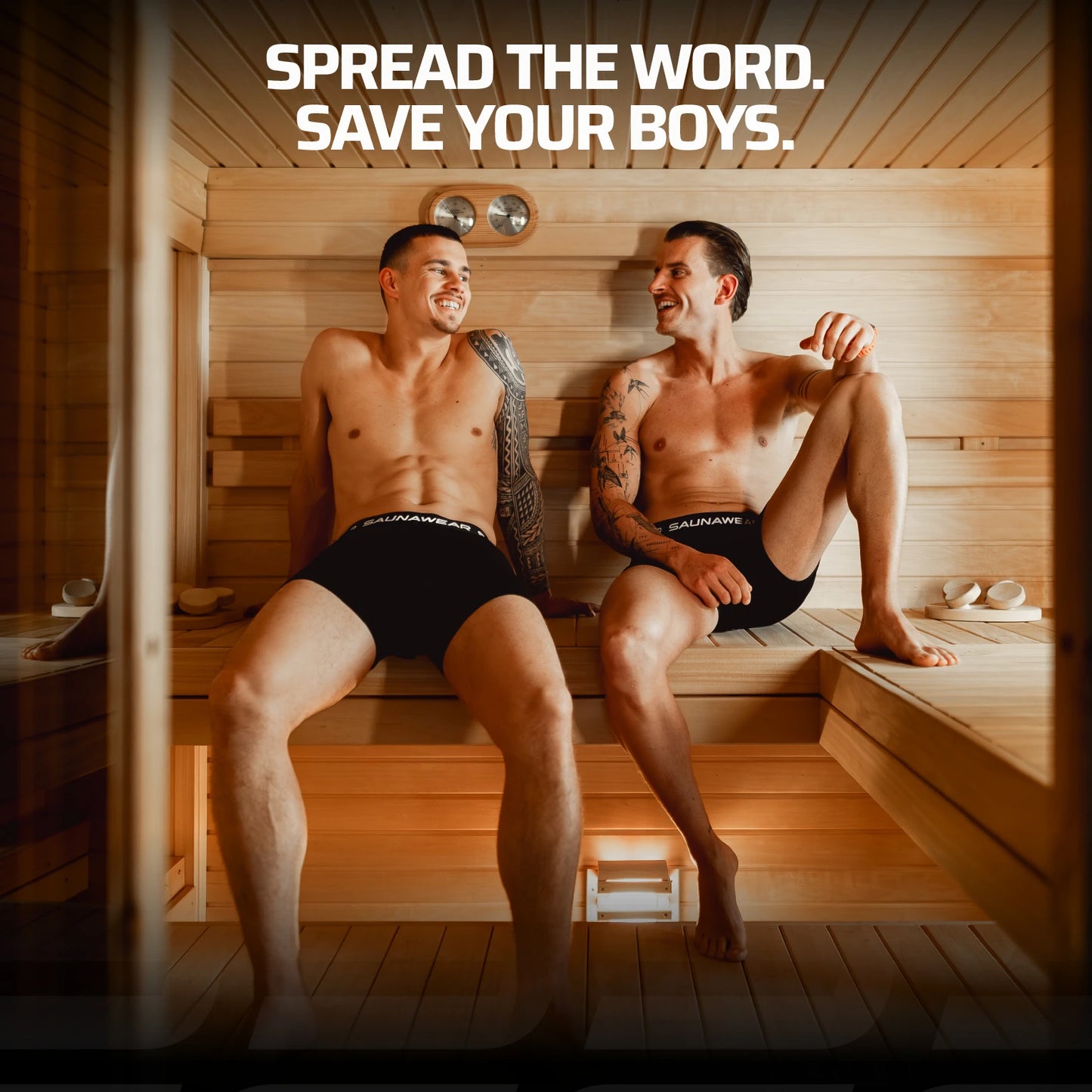
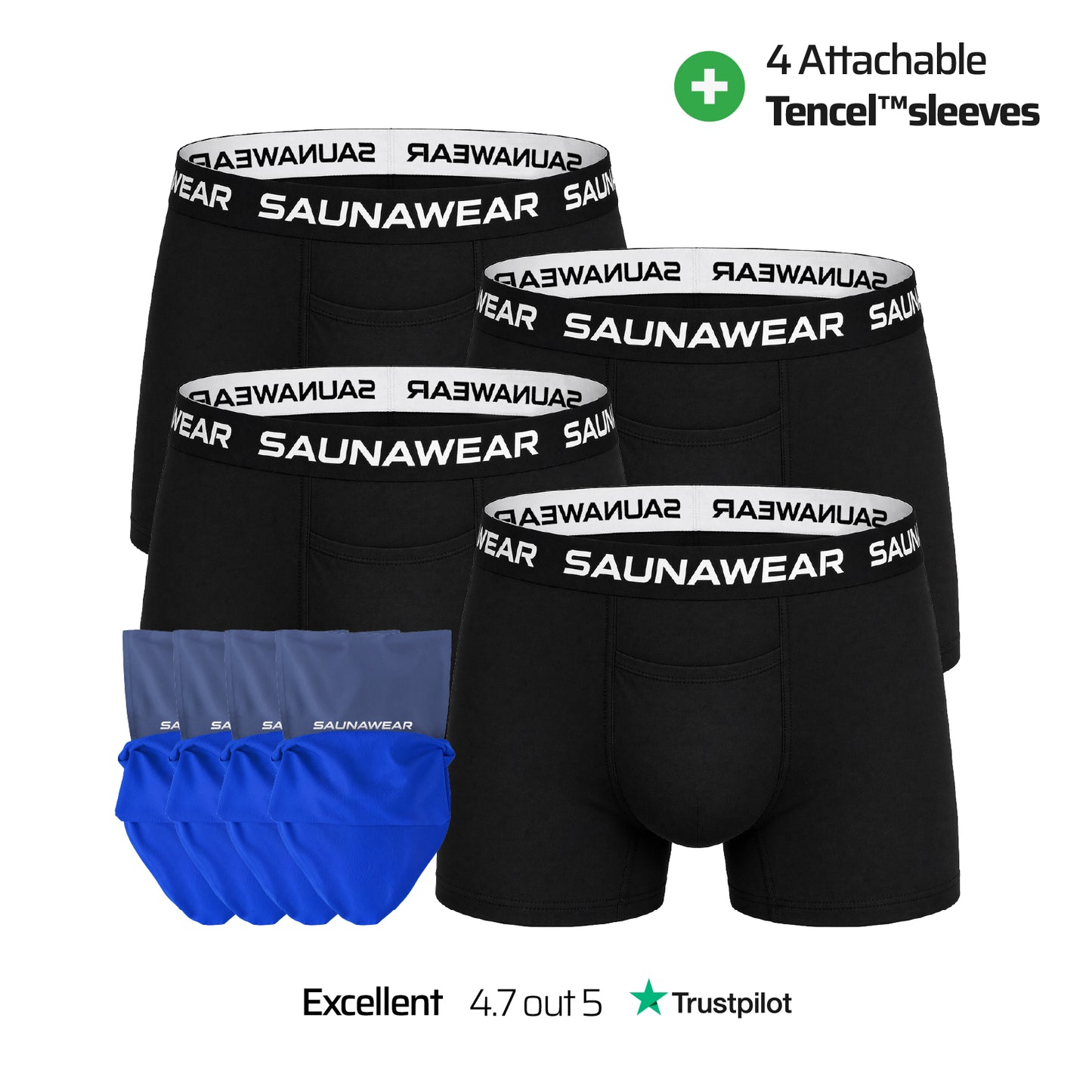
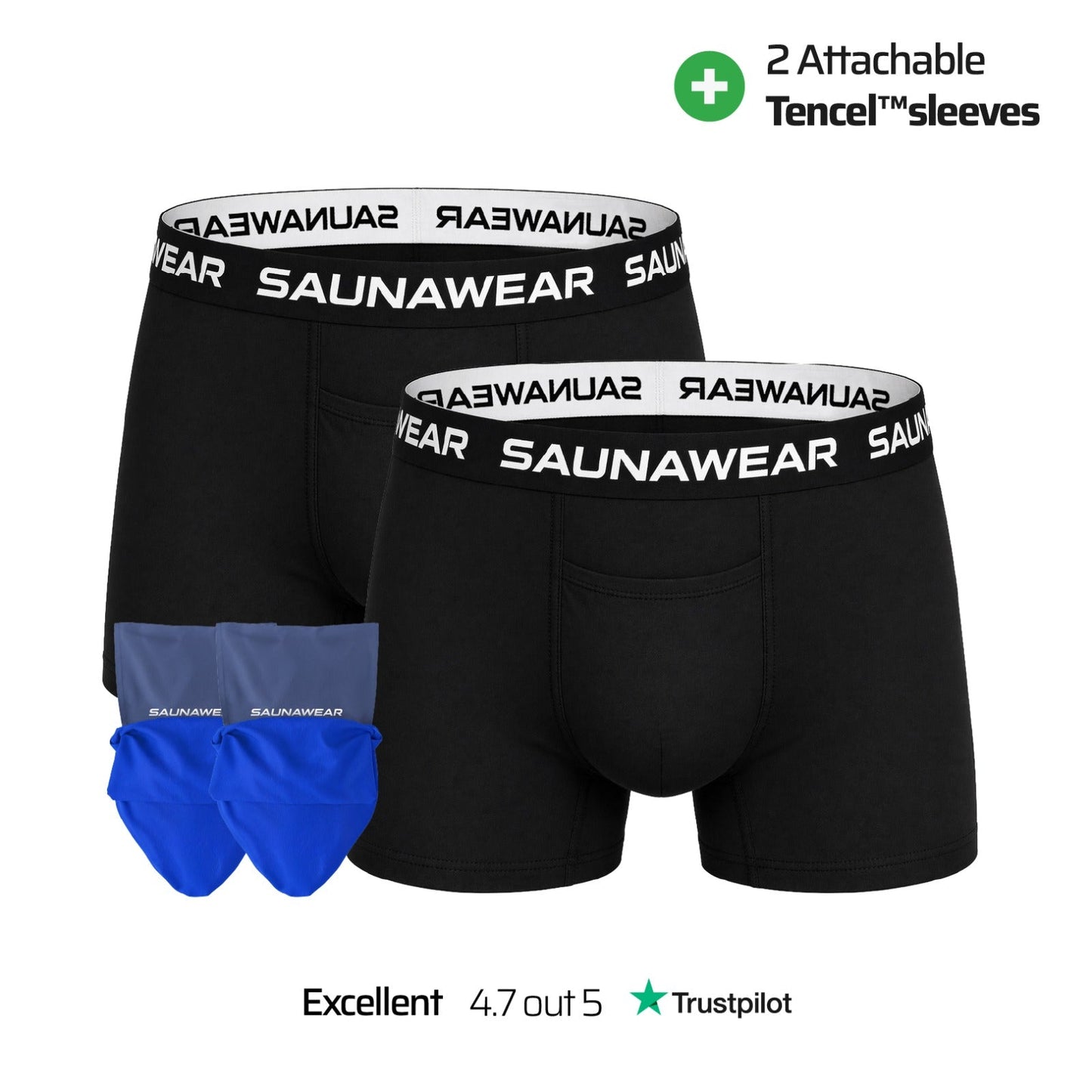
The benefits you go to the sauna for, recovery, heat shock proteins, cardiovascular health, relaxation, and detoxification come from heating your whole body. None of them require heating your testicles. That's the idea behind Saunawear.
It keeps this one small, temperature-sensitive area closer to its natural cool range during your session, so you get the full heat experience while sparing the part of your body that was never meant to be hot.


10K+ sauna enthusiasts
Starterpack
Starterpack

| Size | Waist (cm) | Waist (inch) |
|---|---|---|
| XS | 68–73 | 27–29 |
| S | 73–79 | 29–31 |
| M | 79–84 | 31–33 |
| L | 84–89 | 33–35 |
| XL | 89–95 | 35–37 |
| 2XL | 95–100 | 37–39 |
| XXXL | 100–105 | 39–41 |
Measure around your waist at hip height, just above the waistband of your underwear. Not sure between two sizes? Choose the larger one.

1 set

2 sets

4 sets
Couldn't load pickup availability

Starterpack